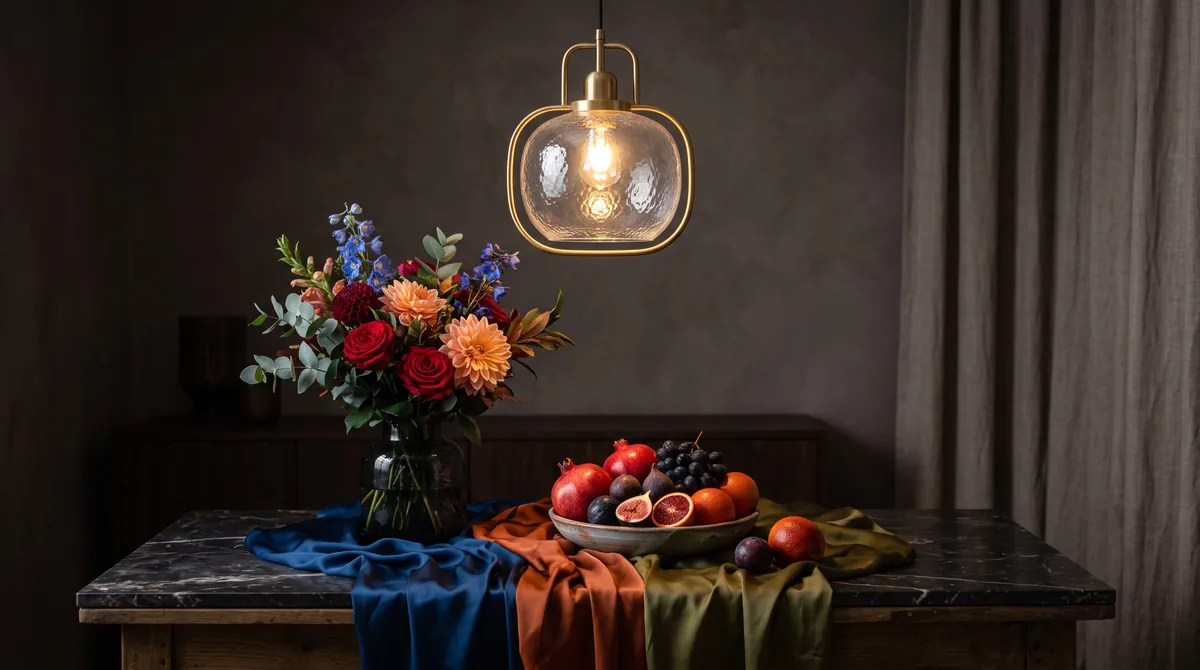
Colour temperature: warm, neutral and cool light explained
Why a candle glows amber and a winter sky looks blue, what the Kelvin number on a lamp really means, and how to choose warm, neutral or cool light for each room.
Try “Arco”, “pendant height”, “Kelvin” or “roof terrace”.
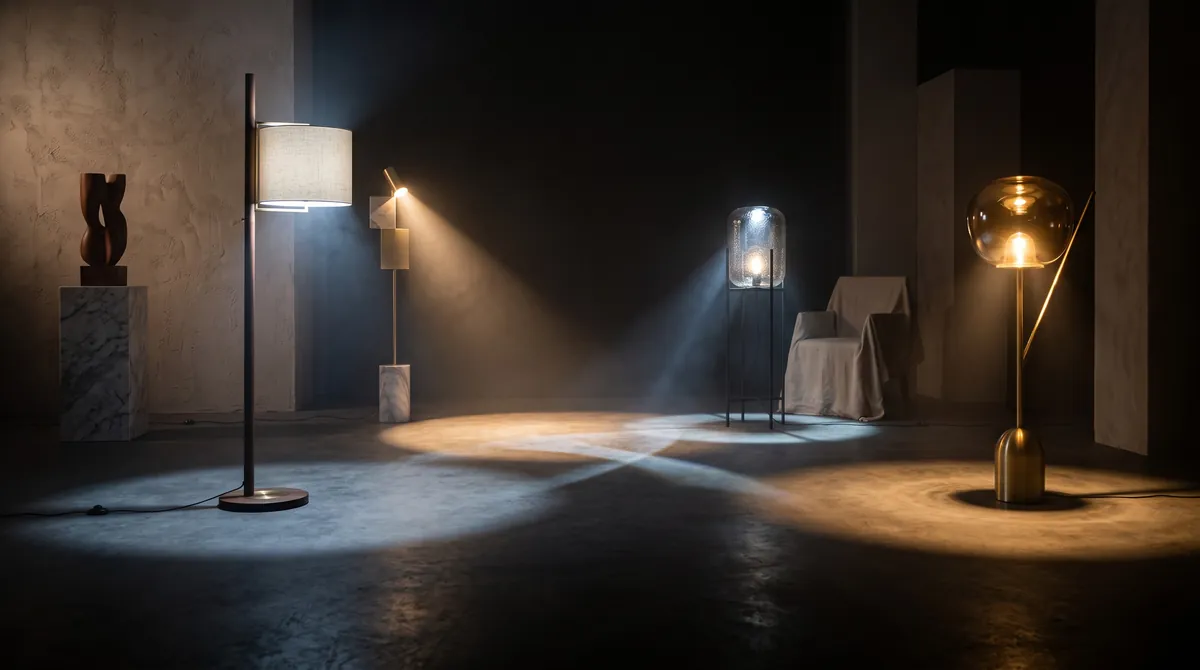

12 articles
Kelvin, CRI, lumens, LED, dimming and smart light.
Colour temperature, colour rendering, lumens, glare and dimming decide whether light feels beautiful. We explain the technology in plain words, so you can read a label and plan light like a professional.
Why a candle glows amber and a winter sky looks blue, what the Kelvin number on a lamp really means, and how to choose warm, neutral or cool light for each room.
Two lamps can share the same brightness and warmth, yet make a ripe tomato, a velvet sofa or your own face look completely different. The reason is colour rendering.
Watts once told us how bright a bulb would be. With LEDs, lumen and lux have taken over. What the three words mean, and how to work out the right amount of light for each room.
An LED that hums, flickers or refuses to dim smoothly is rarely broken. It is usually a mismatch between lamp and dimmer. How dimming works, and how to get it right.
A single ceiling light makes a room visible. Several layers of light make it beautiful. How lighting designers build ambient, task, accent and decorative light, room by room.
Within two decades the light-emitting diode has replaced the bulb that lit our homes for more than a century. What an LED is, how it makes white light and what separates good from mediocre.
Smart lighting is less about gadgets than about calm: the right scene at one touch, light that finds its way at night, and switches that still work when the router does not.
Glare is the reason a beautiful lamp can still feel wrong. How direct and reflected glare arise, what shielding angles and UGR mean, and how shades, height and placement keep light comfortable.
IP44, IP65, IP68: the two digits on a lamp tell you how well it keeps out dust and water. What each digit means, and which ratings suit bathrooms, terraces, ground lights and pools.
Our bodies keep time with light. What research suggests about bright days and dim evenings, how tunable white systems work, and simple, sensible routines for lighting a home through the day.
Since September 2021, bulbs and LED light sources in the EU carry a rescaled energy label from A to G. What the classes mean, why a good LED may sit in class E, and where the QR code leads.
Indirect light bounces off walls and ceilings before it reaches you, which makes it soft, calm and almost shadowless. How coves, uplights and wall washers work, and how to avoid the classic mistakes.
Keep reading