Caring for designer lamps: glass, metal, paper and fabric
Glass, brass, paper, silk and marble all age in their own way. How to clean and store designer lamps by material, and when a repair belongs in the hands of a professional.
A good lamp can outlive the house it was bought for. Glass shades, brass arms, paper lanterns and stone bases all age, but how they age depends largely on you. A soft cloth and the right habits keep a design classic looking as it should, while one wrong cleaner can strip a finish in seconds. Here is how to look after each material, and when to leave the job to a professional.
Before you start: power off, cool down
Switch the lamp off and unplug it, or switch off the circuit for fixed ceiling and wall lights. Then wait. Halogen capsules run very hot, and even LED bulbs and their electronics stay warm for several minutes after use. Wiping a warm glass shade with a cold, damp cloth can also stress the glass.
Always try the gentlest method first. Most lamps need nothing more than regular dusting, and dust removed every week or two never builds into the greasy film that needs water. Never spray liquid directly onto a lamp: spray the cloth instead, and keep moisture well away from lampholders, switches and the point where the cable enters.
- Soft microfibre cloths, one damp and one dry
- A soft brush, such as a clean make-up or shaving brush, for paper, fabric and crevices
- Cotton gloves for glass, polished metal and anything you want to keep free of fingerprints
- Mild washing-up liquid and lukewarm water
- A stable step ladder for pendants and chandeliers, ideally with a second person to hand you parts
Glass and opal glass
Clear and coloured glass can be washed. Where shades come off easily, remove them and wash them by hand in lukewarm water with a drop of mild washing-up liquid, then rinse and dry with a lint-free cloth. Avoid the dishwasher: heat and detergents can dull painted, gilded or etched surfaces, and a delicate mouth-blown shade is not worth the risk.
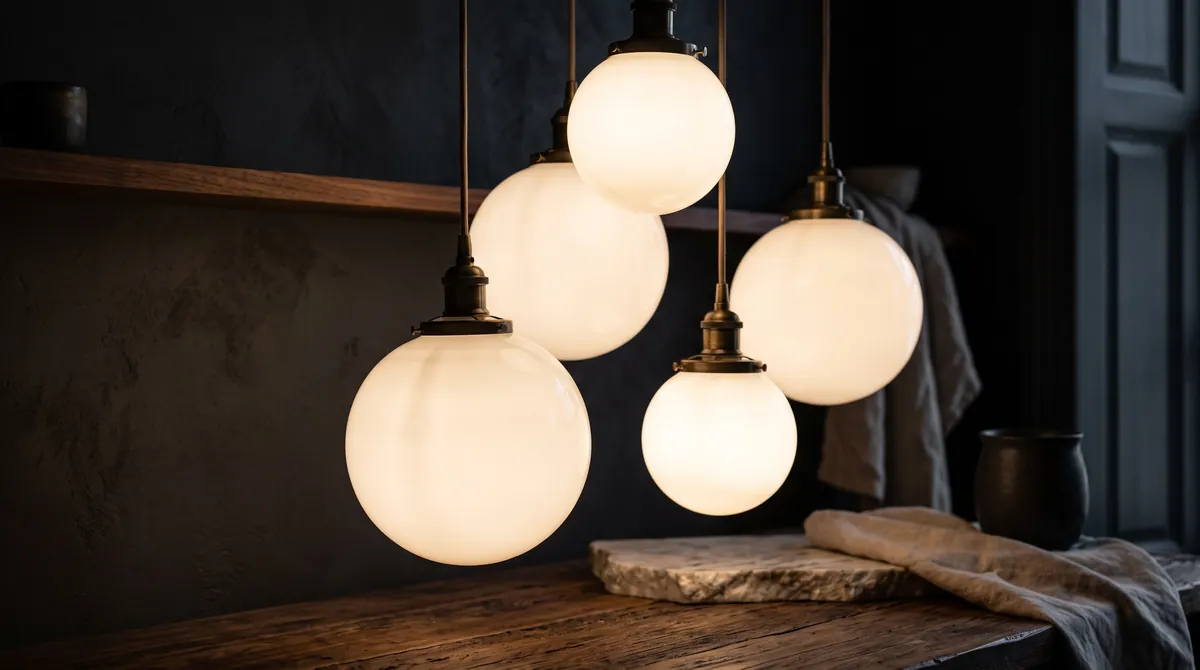
, the milky white glass used for globes and diffusers (a spreads light evenly and hides the bright source), comes in glossy and satin finishes. Glossy opal is cleaned like clear glass. Satin opal has an etched or sandblasted surface that holds fingerprints and grease, so handle it with gloves and never use abrasive pads or scouring powders, which polish shiny patches into it. Check the inside of globes too: dust and insects collect there and show up as dark shadows once the light is on.
Polished, brushed and lacquered metal
Chrome, polished nickel and polished aluminium need only a soft dry cloth, with a slightly damp one for fingerprints. Dry at once to avoid water marks. Brushed metal has fine parallel lines, so always wipe along the grain, never in circles. Painted and powder coated metal, a tough baked-on finish common on task lamps, cleans well with a damp cloth and a little mild soap.
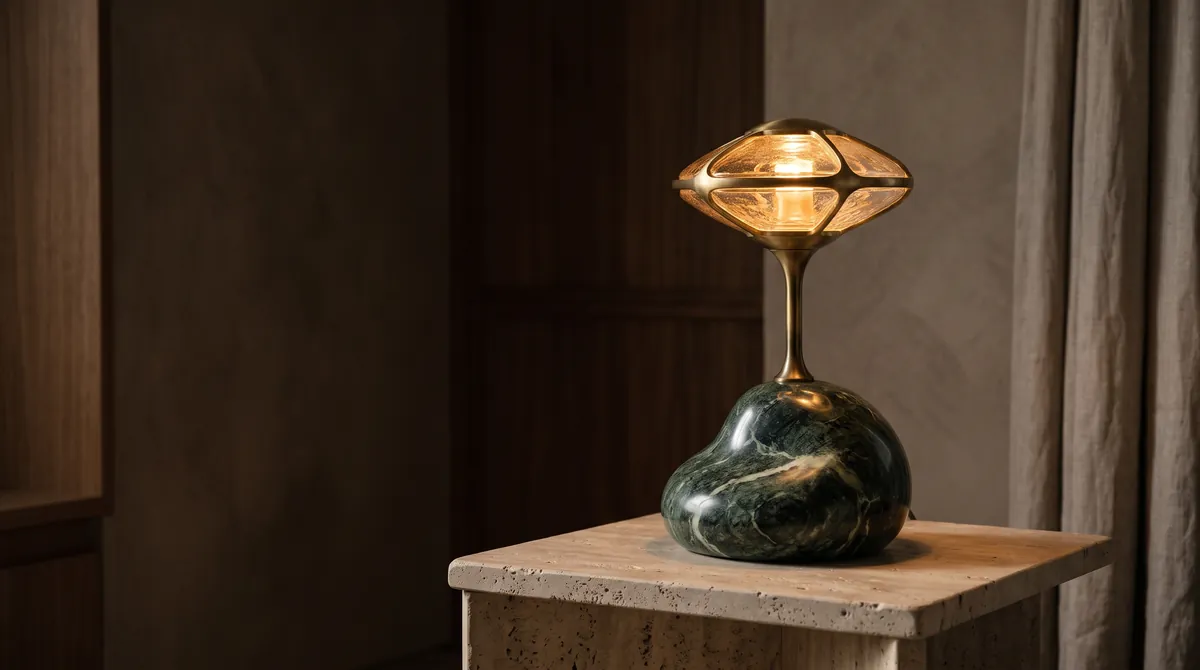
Brass needs a moment of detective work. Many brass lamps are lacquered: a clear protective coat keeps the shine. Clean these with a damp cloth only, because metal polish removes the and leaves patchy tarnish. Unlacquered brass develops a , a gradual darkening of the surface. You can let it age, which many collectors prefer, or polish it with a brass cleaner, keeping the polish away from shades, cables and any stone base.
Paper, fabric and natural fibres
Paper lanterns and shades (Japanese paper made from plant fibres) should never get wet. Remove dust with a soft brush or a feather duster, working gently from top to bottom. A hair dryer on its cold setting, held at a distance, blows dust out of folds and ribs. Small marks can sometimes be lifted with a clean, soft eraser, tested first on a hidden spot.
Fabric shades in linen, cotton and silk respond well to a lint roller or a vacuum cleaner on low power with a soft brush attachment. Most shades are glued to a stiff liner, so washing them will ruin them. For a stain, dab with a barely damp cloth after a test on the inside seam, and leave silk to a specialist cleaner or shade maker. Rattan, wicker and wood need only dusting and, now and then, a slightly damp cloth, dried straight away.
Marble, stone and ceramic
Marble and travertine are soft carbonate stones that react with acids. Vinegar, lemon juice, limescale removers and many bathroom cleaners etch the surface and leave dull spots. Dust with a dry cloth and, when needed, use a damp cloth with a pH-neutral cleaner, one that is neither acidic nor alkaline. Wipe away spills of wine, perfume or oil quickly.
Glazed ceramic bases are easier: a damp cloth with a little mild soap is enough. Unglazed ceramics and biscuit porcelain absorb marks, so dust them dry with a soft brush.
Dust removed every week or two never builds into the greasy film that needs water.
Storing and moving lamps
When a lamp goes into storage, remove the bulb and the shade and pack them separately. Wrap glass in acid-free tissue and bubble wrap, and use the original packaging if you still have it. Store everything somewhere dry with a stable temperature: damp cellars corrode metal and mark paper, while hot attics dry out glue and lacquer. Keep paper and fabric shades out of direct sunlight, which fades them.
For a move, never carry a lamp by its shade or arm. Secure articulated arms with soft ties so they cannot swing, pad stone bases well, as their corners chip easily, and transport heavy bases upright. Lift heavy stone with two people.
When to call a professional
Cleaning is your job, but electrics are not. Call a qualified electrician if you notice any of the following:
- A cable that is frayed, cracked, brittle or kinked
- A burning smell, scorch marks or a discoloured lampholder
- Flickering or buzzing that does not stop when you change the bulb
- A loose lampholder, switch or plug
- A vintage lamp with its original wiring, especially metal lamps without an earth connection
Rewiring a lamp, repairing a switch or replacing a ceiling fitting should always be done by a qualified electrician. For damaged glass, chipped ceramics, worn lacquer or a torn silk shade, look for a restorer who specialises in that material. A careful repair keeps the original character of a lamp, and on a design classic it also protects its value.
glaminia is independent and does not sell lamps or recommend dealers. Images are AI generated illustrations, not photographs of specific products. Have fixed electrical work done by a qualified electrician.