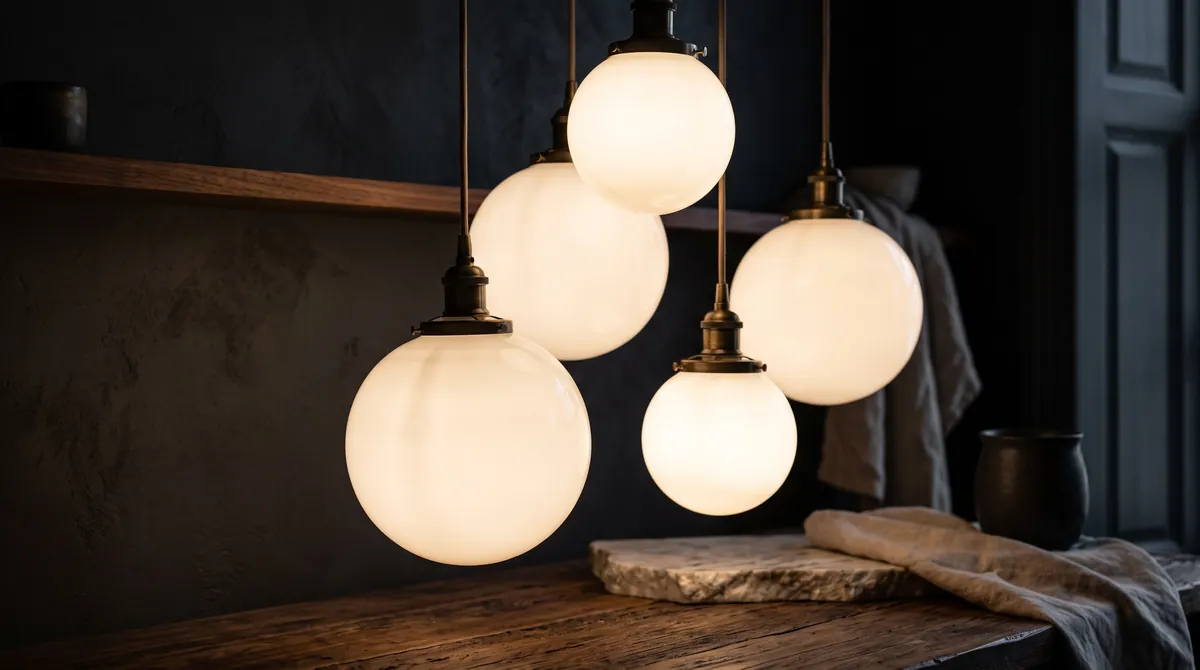
Paper lamps: washi, lanterns and soft light
Paper is the lightest of all lamp materials, yet it can calm an entire room. Here is how Japanese washi is made, where the lantern traditions began and how to choose and care for a paper lamp.
A paper lamp does something no glass or metal shade can: it makes light feel weightless. Behind a thin skin of fibre, a bulb becomes a soft, even glow that seems to float in the room. Paper is one of the oldest ways of taming a flame and, thanks to modern bulbs, one of the most relevant today.
What makes washi different
is traditional Japanese paper, made from the inner bark of shrubs and trees rather than from wood pulp. The three classic fibres are , the paper mulberry and the most widely used; mitsumata, a shrub known botanically as Edgeworthia chrysantha; and gampi, prized for a fine, smooth sheet with a soft sheen.
In the method, which developed in Japan in the early ninth century, the papermaker adds a plant mucilage called neri to the vat and rocks the mould so the long fibres interlock in thin, even layers. The result is paper that is usually tougher than Western paper made from wood pulp, thin yet pliable and strong.
Those long fibres are also what you see when a washi lamp is lit: a faint, cloudy texture that scatters light evenly. In 2014 UNESCO inscribed the craftsmanship of traditional Japanese hand-made washi on its list of the Intangible Cultural Heritage of Humanity.
A long tradition of lanterns
Paper lanterns lit Japanese homes, temples and streets for centuries. The was a paper-covered frame around an oil lamp or candle, used indoors, while the collapsible chōchin, paper stretched over a spiral of bamboo, could be carried or hung outside. Paper also filled the shoji, sliding screens that turn daylight into a soft, shadowless glow.
In 1951 the sculptor Isamu Noguchi visited Gifu, a town known for lanterns and umbrellas made from mulberry bark paper and bamboo. Its mayor hoped to revive the local lantern trade, which electric light had left behind. Noguchi answered with Akari, light sculptures in which washi is glued to bamboo ribbing stretched over a wooden mould, removed once the glue has set.
He chose a name that means light as illumination and also suggests lightness of weight. Akari lamps are still made by hand in Gifu, and their success turned the paper lantern into a fixture of modern interiors around the world.
A paper lamp makes light feel weightless, as if the glow were floating in the room.
How paper shapes light
Paper is an ideal , the part of a lamp that spreads light and hides the bright point of the bulb. A paper globe sends light in almost every direction at once, lighting the ceiling, the walls and the faces around a table with very little glare. Thicker or layered paper gives a lower, warmer glow; thin washi lets more light through and shows its fibres.
Shape matters too. Spheres and ovals glow evenly all round, open cylinders send extra light up and down, and pleated or ribbed forms create bands of light and shade. Large paper pendants suit dining tables and living rooms, where their soft light makes a room feel calm rather than bright.
Bulbs, heat and safety
Paper and heat need mutual respect. Incandescent and halogen bulbs can scorch or brown paper over time, which is why LED bulbs, which produce very little heat, are the natural partner for paper lamps. Always follow the maximum wattage on the lamp’s label, and make sure the bulb hangs centrally without touching the paper.
Many paper shades rely on a simple wire frame or spreader that holds the paper away from the bulb. Check that it sits firmly before you hang the shade. If you are adding a new ceiling point or a dimmer, ask a qualified electrician, and choose bulbs marked as dimmable.
Choosing the right size
Paper lamps come in sizes from small table lanterns to pendants wider than an armchair, and scale is what makes them work. A few rules of thumb help:
- Over a dining table: choose a pendant roughly half the width of the table and hang it about 75 to 90 cm (30 to 35 inches) above the tabletop.
- In a living room: a generous globe makes a soft central light; add table and floor lamps for reading and for evening atmosphere.
- In a bedroom: smaller globes or a paper table lamp beside the bed give gentle light without glare.
- In low rooms: choose a flatter or oval shape and keep at least about 2.1 m (7 feet) of clearance beneath it where people walk.
Cleaning and care
Paper dislikes water, so keep cleaning dry. Switch the lamp off and let it cool, then remove dust with a soft brush, a clean make-up brush or a hairdryer on its cool setting. Avoid damp cloths, sprays and household cleaners, which leave stains and soften the fibres.
Keep paper lamps away from steamy bathrooms, open windows and strong direct sun, which can yellow some papers over the years. Handmade washi naturally shows small irregularities, slight shifts in colour and visible fibres; these are signs of the craft, not faults. A small tear can often be patched from the inside with a strip of thin washi and a little starch paste.
glaminia is independent and does not sell lamps or recommend dealers. Images are AI generated illustrations, not photographs of specific products. Have fixed electrical work done by a qualified electrician.