
Wine cellar lighting: show the bottles, protect the wine
A wine cellar should glow like a treasure room without harming what it keeps. Ideas for backlit racks, shelf lighting, tasting tables and glass wine rooms, with low heat and no UV.
A wine cellar is both a store and a stage. Its first duty is to keep wine cool, dark and undisturbed for years. Its second, in a villa or penthouse, is to show the collection beautifully when you walk down with a guest to choose a bottle. Modern lighting can do both, provided you respect what light, heat and time do to wine.
What light does to wine
Wine likes darkness. Ultraviolet () and short-wavelength blue light can trigger chemical reactions in wine, known as , which produce unpleasant aromas. Clear and pale glass bottles offer the least protection, which is why white and sparkling wines in clear glass are the most vulnerable. Heat is the second enemy: wine is usually kept at a steady temperature of around 10 to 14 °C (50 to 57 °F).
Old halogen and incandescent lamps were therefore a poor choice for cellars. Modern LEDs emit practically no UV and very little radiant heat, so they can sit close to the bottles. Their drivers (the small power supplies LEDs need) still produce some warmth and belong outside the cellar or in a ventilated spot away from the racks. Whatever the source, the simplest protection is time: lights should be on only while someone is in the room.
Design ideas
- 01
Backlit bottle racks
A frosted acrylic or translucent onyx panel behind the racks, lit evenly from behind, turns the bottles into dark silhouettes against a warm glow.
- 02
Light along every shelf
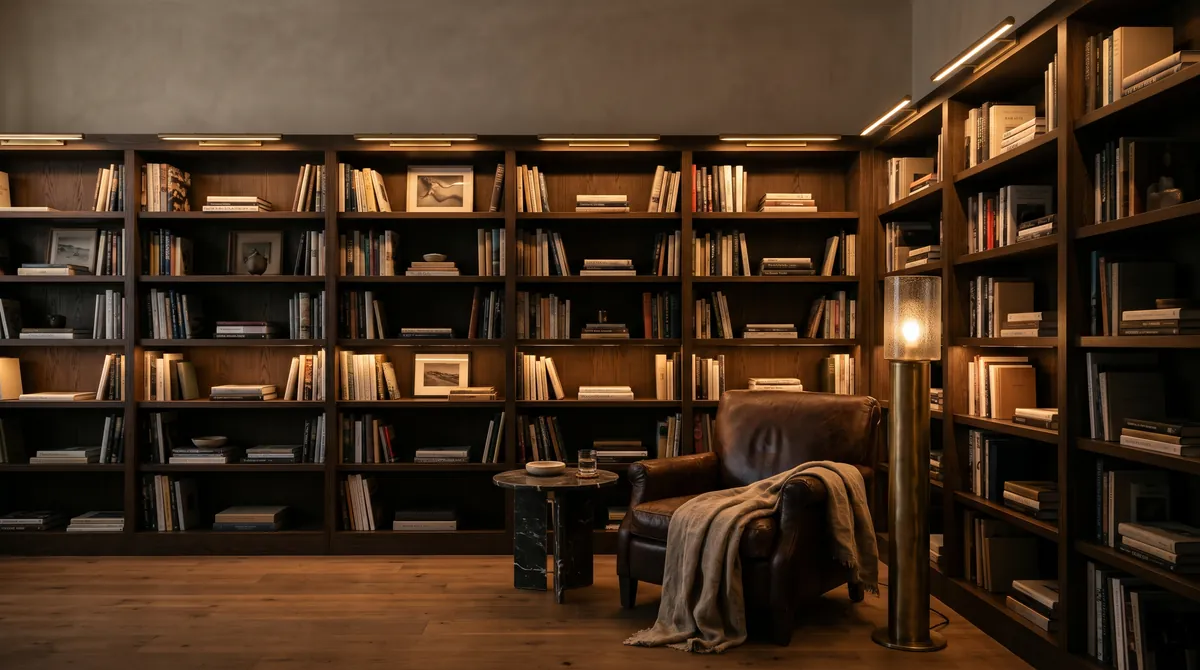
Slim LED profiles under the front edge of each shelf light labels and necks from above, so you can read vintages without pulling out bottles.
- 03
Display cradles for the stars
A few angled shelves for magnums or rare vintages, each with its own small accent light, work like a museum vitrine within the racks.
- 04
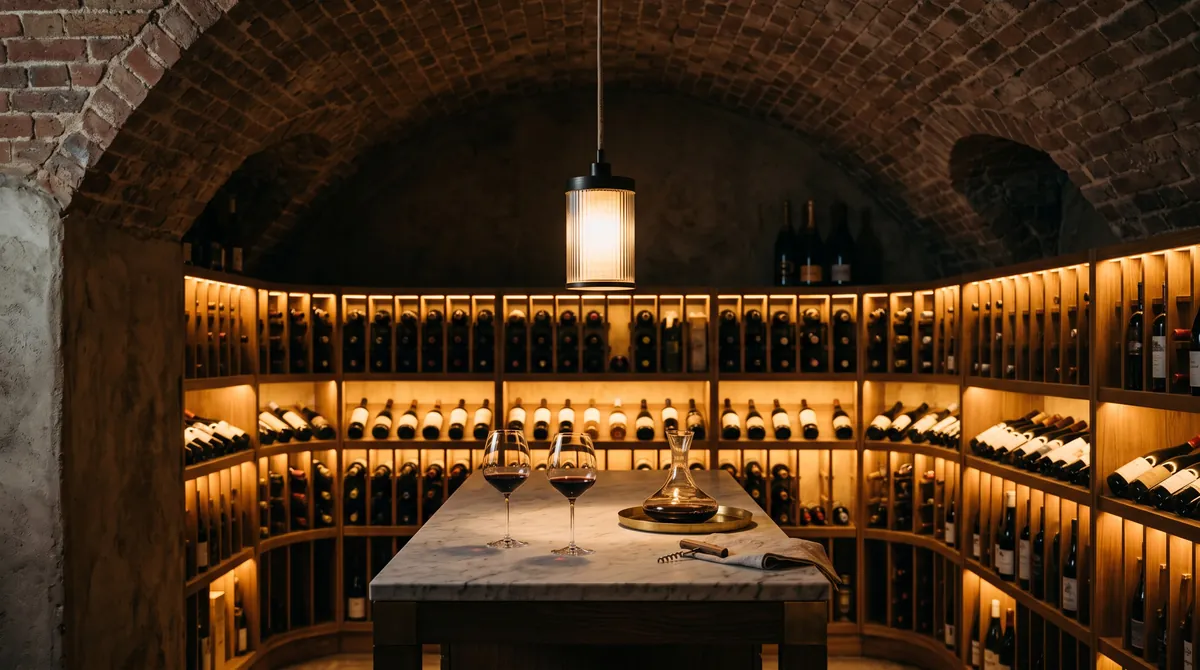
Grazing light on vaulted brick
Uplights at the base of a brick or stone vault graze the surface and bring out its texture, turning the structure itself into decoration.
- 05
One pendant over the tasting table
A single warm pendant hung low over a tasting table creates an intimate island of light for glasses, decanters and conversation.
- 06
The glass wine room
A glazed wine room beside the dining room or in the stairwell, lit softly from within, shows the collection as a glowing wall in the evening.
- 07
A lit descent
Gentle step lights on the cellar stairs and a soft wash on the door make the way down safe and set the mood before the door even opens.
Racks, shelves and labels
The two classic approaches are lighting from behind and lighting along the shelves. Backlighting creates drama: bottles become silhouettes, glass glows amber or green at the edges and the wall reads as one luminous surface. It shows the collection as a whole, but not the labels.
Shelf lighting does the reverse. An (an aluminium channel holding an LED strip behind a diffuser) under the front edge of each shelf or in the uprights lights the necks and labels. The most beautiful cellars combine the two: a backlit feature wall for the view from the door and shelf lighting where bottles are chosen.
- Keep the light source hidden, so you see the glow and never the LED.
- Use a warm colour temperature of 2,700 to 3,000 K. Kelvin (K) measures how warm or cool light looks, and these values flatter wood, brick and glass.
- Choose a colour rendering index () of 90 or above, so labels and the colour of wine in a glass look true.
- Make every layer dimmable, so the cellar can glow softly when it is seen through glass.
The tasting table
A tasting table is where light becomes social. One pendant, hung about 65 to 75 cm (26 to 30 inches) above the table top, gives a warm pool of light without dazzling those seated. Choose a shade that directs light downwards: a deep metal dome, a frosted glass bowl or a finely woven shade. You need enough light to judge the colour of the wine against a white napkin, so good colour rendering matters here too.
Around the table, keep everything else low. A dimmed wash on the racks behind frames the scene and lets the table remain the brightest place in the room.
Glass walled wine rooms
A glazed wine room in the living area or beside the dining table is one of the most striking features of a contemporary villa. Because it is seen from outside, its lighting is designed like a shop window: even light on the bottles, no visible fittings and no downlights reflected in the glass.
Lighting from the sides or from behind the racks keeps reflections out of the glazing. Coordinate the light with the climate control and the glass itself: insulated or UV filtering glazing helps keep conditions stable, and the lighting inside should add as little heat as possible.
Sensors, timers and safety
The ideal cellar light is on only when needed. Motion sensors on the stairs and at the door, door contacts for wine cabinets and an automatic switch off after a set time protect the wine and save energy. A soft start that fades in over a second or two feels far more pleasant than an instant blaze.
Cellars are cool and can be damp, so fittings need suitable protection against moisture. New circuits, sensors and any fixed wiring in a cellar should be planned and installed by a qualified electrician, ideally together with the specialist for the cooling system.
Common mistakes
Downlights that leave the racks dark and shine on the floor instead. Visible LED dots reflected in every bottle. Cool white light that makes a vaulted cellar feel like a storeroom. Lights left burning for days because nobody remembered the switch. Each is easy to avoid at the planning stage and expensive to fix once the racks are built.
glaminia is independent and does not sell lamps or recommend dealers. Images are AI generated illustrations, not photographs of specific products. Have fixed electrical work done by a qualified electrician.