
Wall lights: sconces, swing arms and wall washers
Wall lights bring a room to eye level, sculpt textures and free up floors and tables. A guide to sconces, swing arms, plug-in designs, heights, spacing, bathrooms and outdoor versions.
Wall lights are the secret of rooms that feel finished. They put light at eye level, where it flatters faces, they turn plaster, stone and wood into living surfaces, and they leave floors and tables free. In a hallway they set a rhythm, beside a bed they replace a lamp, and on a façade they welcome you home. Some of the best loved designs in lighting history, from Jean Prouvé’s Potence to the swing arm Lampe Gras by Bernard-Albin Gras, are wall lights.
Types of wall light
A is the classic decorative wall light, from candle-style brackets to sculptural plaster shells. Up and down lights send beams both upwards and downwards from a slim body and draw two lines of light on the wall. Uplights throw their light onto the ceiling for a soft, indirect glow, while swing arm lights have a jointed or pivoting arm, so the light can be pulled towards a bed, a chair or a desk.
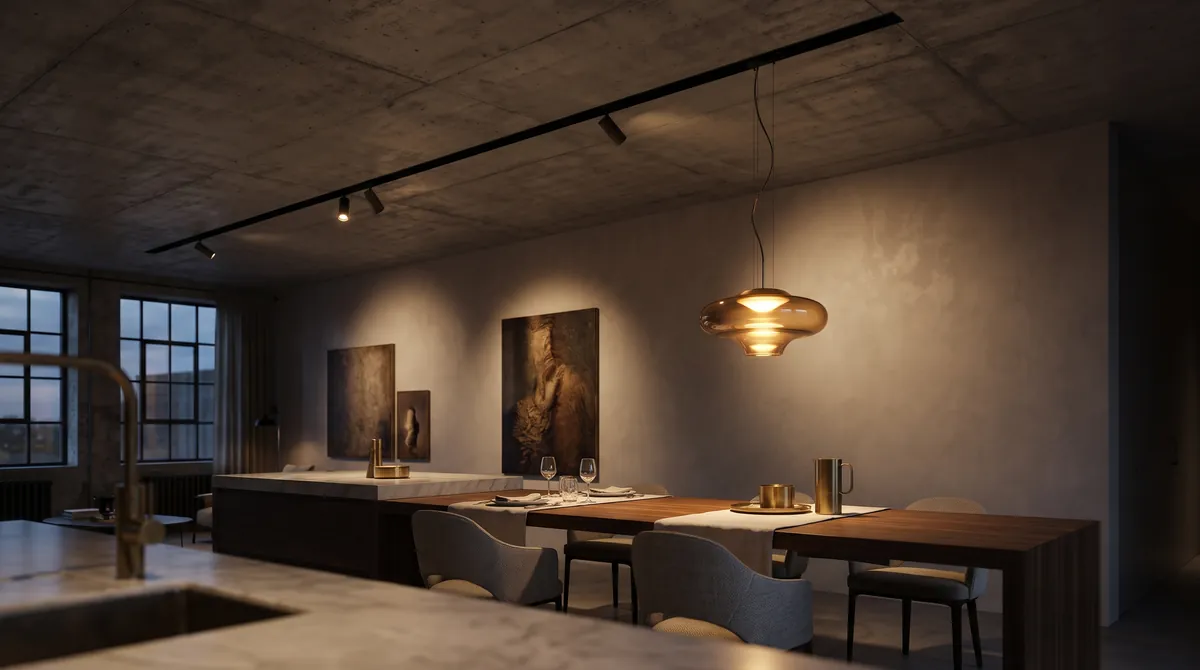
A spreads light evenly over a whole wall, often from a concealed fitting near the ceiling, and makes a room look larger and calmer. Picture lights sit above a painting and light it from close up. Outdoors, robust lanterns and up and down lights frame doors and façades.
| Type | Light | Typical use |
|---|---|---|
| Decorative sconce | Soft glow, often diffused | Living rooms, dining rooms, hallways |
| Up and down light | Two beams, graphic lines | Hallways, façades, modern rooms |
| Uplight | Indirect, onto the ceiling | Living rooms, bedrooms, high ceilings |
| Swing arm | Directional, adjustable | Bedsides, reading corners, desks |
| Wall washer | Even wash over a whole wall | Art walls, plaster, stone |
| Picture light | Close, focused light on art | Paintings, libraries, studies |
Height, spacing and placement
As a rule of thumb, mount decorative sconces so the light source sits around 150 to 170 cm (59 to 67 inches) above the floor, at or just above eye level. Under high ceilings you can go higher, and on stairs keep a constant height above the treads. In long hallways, space wall lights about 2.5 to 3 m (8 to 10 feet) apart, a little closer if the fittings are small.
Beside a bed, a swing arm light usually works at about 120 to 140 cm (47 to 55 inches) from the floor, so the shade sits just above your shoulder when you sit up. Either side of a bathroom mirror, mount lights at face height and 70 to 100 cm (28 to 39 inches) apart, so they light the face evenly. In narrow corridors, choose slim fittings that project no more than 10 to 12 cm (4 to 5 inches).
Design ideas
- 01
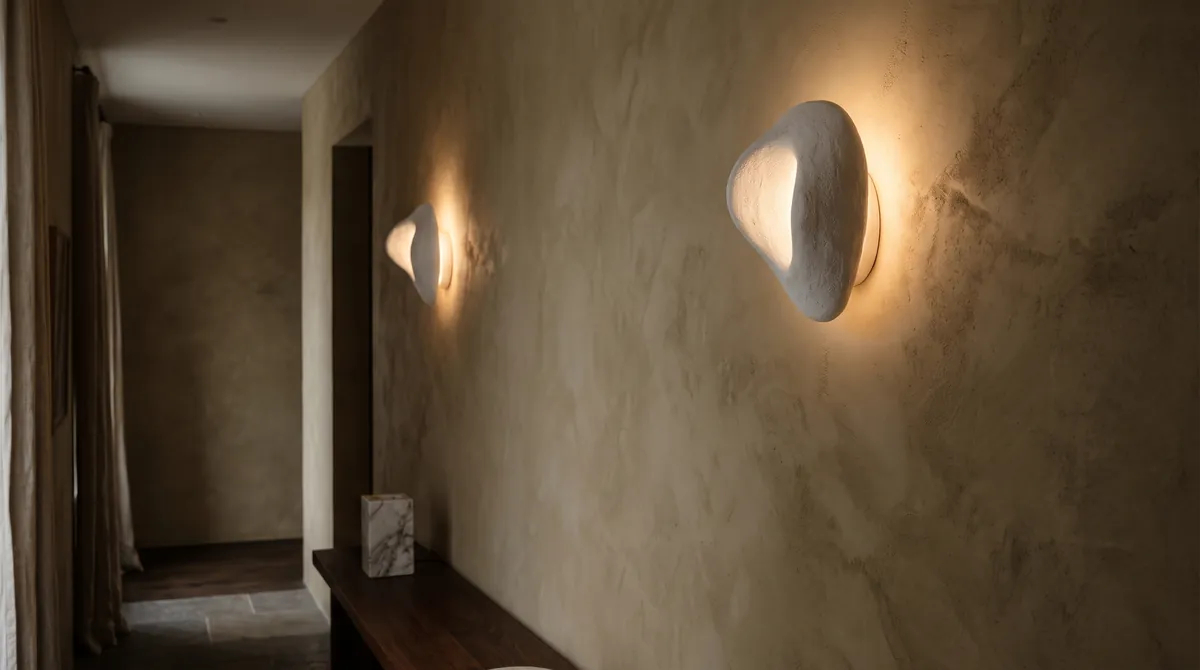
Plaster shells on lime walls
Mount sculptural plaster sconces on a lime-plastered hallway wall and let them cast soft light up and down. The low-angled light brings out every trowel mark.
- 02
Swing arms by the bed
Fix two brass swing arm lights either side of the bed, with switches within reach. The bedside tables stay free for books, and the light can be pulled right over the page.
- 03
Grazed stone after dark
Run a concealed linear light close to a natural stone wall in a villa living room. Light skimming the surface reveals the relief of every stone at night.
- 04
Lanterns framing the façade
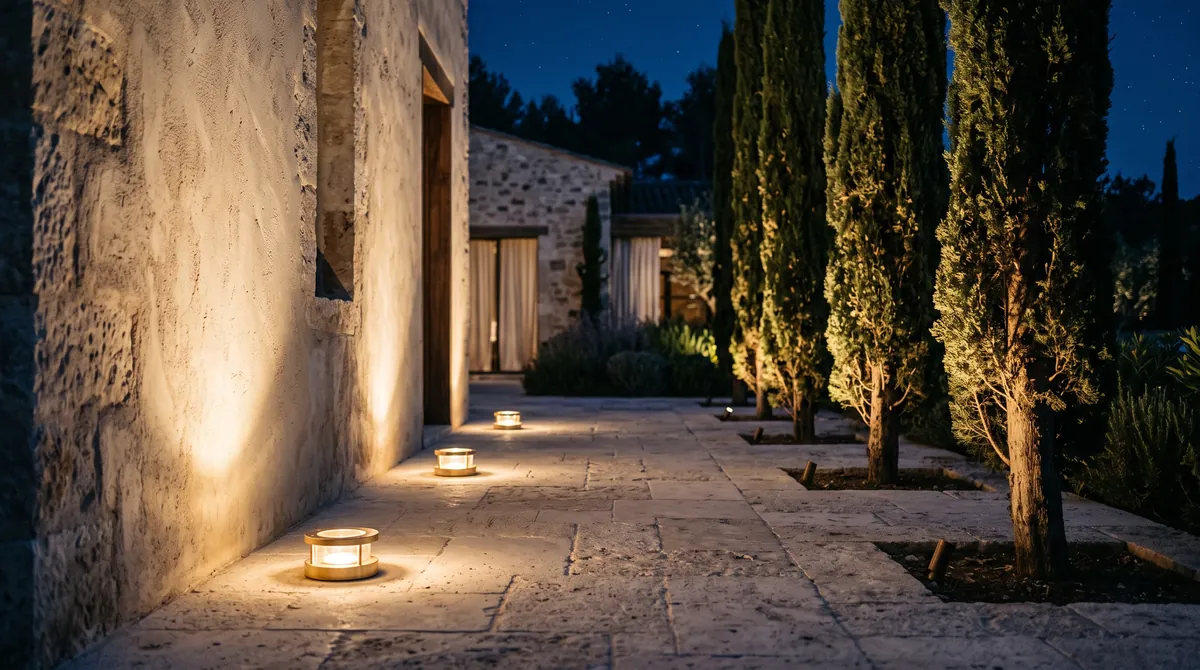
Frame the front door and garage of a villa with matching bronze up and down lights on a dusk sensor. From the drive, the house looks composed and welcoming.
- 05
Picture lights in the library
Hang slim brass picture lights above the paintings in a library, dimmed to a warm 2,700 K. The room takes on the quiet atmosphere of a private collection.
- 06
Alabaster in the powder room
Use two small alabaster or opal glass sconces either side of the mirror in a guest washroom. They flatter faces, and the stone glows warm even when nobody is there.
- 07
Plug-in sconces for renters
Hang plug-in wall lights with fabric cables above a sofa or desk, the cable running in a neat line to the socket. You get the effect of wired sconces without new cables in the walls.
Lighting walls, textures and art
Wall lights do more than light a room: they light the wall itself. Light that skims along a surface from very close, called , exaggerates texture and is beautiful on brick, stone, timber and hand-applied plaster. Light from a little further away, a wall wash, flattens texture into an even, gallery-like surface, which suits smooth walls and art.
Up and down lights paint shapes on the wall that depend on their beam angle: narrow beams give crisp lines, wide beams soft fans. Treat that pattern as part of the design, just as much as the fitting itself.
Plug-in wall lights without new wiring
Not every wall light needs new wiring. Many designs come with a plug and a fabric cable: you screw them to the wall and connect them to an ordinary socket. They are ideal for rented flats, listed buildings, or for trying a position before you commit. Good designers make a feature of the cable rather than hiding it.
- Choose a cable colour that matches the wall, or contrasts on purpose.
- Fix the cable with neat clips in straight lines, never loose and dangling.
- Look for an inline switch or dimmer within easy reach.
- Use cordless rechargeable sconces where no socket is close.
Bathrooms, outdoors and safety
In bathrooms and outdoors, wall lights must be protected against water. That protection is shown by the , a two-digit code: the first number covers dust and solids, the second water. Near a basin or under a covered terrace, IP44 is a common minimum, while exposed façades and areas close to a shower need higher ratings. Your electrician knows the bathroom zones and the local rules.
Colour temperature matters on walls too. Choose 2,700 K for living spaces and 3,000 K for bathrooms and mirrors; (K) is the scale of how warm or cool white light looks. Outdoors, warm white of about 2,700 K looks welcoming and is kinder to the night than cool light. Fixed wall lights, outdoor fittings and any bathroom installation should always be connected by a qualified electrician.
glaminia is independent and does not sell lamps or recommend dealers. Images are AI generated illustrations, not photographs of specific products. Have fixed electrical work done by a qualified electrician.